Thursday, March 27, 2014

March Madness


Long before Elizabeth Gilbert ate, prayed and loved her way through Italy and India, and years before Cheryl Strayed found herself on the Pacific Coast Trail, Dervla Murphy traveled solo around the world on a bicycle. The year was 1965, and her bicycle trek took her from her hometown of Dunkirk, across Europe, through Iran and Afghanistan, over the Himalayas to Pakistan and India. 

Murphy was a powerhouse: witty, opinionated and a born adventurer who had an immediate rapport with people with whom that she had little in common. I got to know her when I read a book she wrote called, Full Tilt.  I was 12 years old when I picked it up and it was the first book I ever read that chronicled the life of a fearless woman. Can women even do this kinda stuff, I remember asking myself when I first set to reading it? But I knew the answer by book's end. So taken was I by Murphy and her adventure that I put pen to paper and wrote her a long, rambling letter telling her that she was my hero for going on a bike to a strange place - without her parents! -for as long as she did. I sent it out and then promptly forgot about it until about four months later when I returned home from school to find a letter from Murphy laying atop my bed. I was gobsmacked. In it, she thanked me for reading her book and for sending a letter in return. Then she told me to get out there and see the world for myself and pursue my dreams, regardless of how big or small they might be. I never forgot it. 

We are coming up on the last days of March which, as many of you may already know, is Women's History Month. The month is about honoring strong and independent women, whether they are famous or everyday heroines. And this year, instead of forgetting entirely about the month's theme (as I've done in year's past), I made a conscious effort of talking up the women who made a difference in my life. There are the famous women - Dervla Murphy's (of course), Anne Frank, Alice Munro, Malala - but there are also the women who aren't so famous. Like the three women in the picture above: Bobbi Armstrong, who taught me how to swim; Evelyne Wohlberg who taught me how to sing; and Sally Spence, who taught me how me to laugh like you really mean it. I encourage you to get out there and do the same. Even if there is only one or two days left in the month.......

P.S. For those you who are into independent music, I urge you to check out my friend, Brent Wolhberg's band, The Blazing Elwood's latest, Don't Sell the Car. Brent and a few of his musical pals, Sean Barrett and Chris Leblanc, placed second nation-wide in CBC's Next Great Canadian Hockey Song contest. Their song, For the Love of the Game, as well as, Don't Sell the Car, were recorded at his studio, Artifact Media, in my hometown of Sudbury. He is talented and driven and his mother, is the the fancy lady classing up that Adidas track suit in the picture above. So his kung fu is strong. Well done, Wohlberg!!!

Saturday, December 28, 2013

The Best Books 2013 (According to Moi)


You know the drill: I read a few books that were published in the year 2013. I make the list. You decide whether I'm crazy or not. About the books, I mean. Not in general. These were the ones I was crazy about:

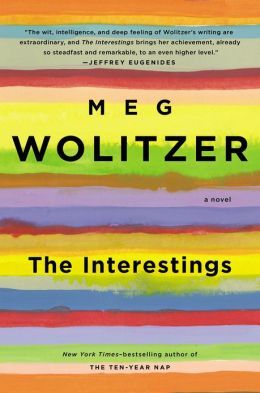
1. The Interestings by Meg Wolitzer 

The Interestings
Meg Wolitzer has always been one of my favourite American authors (The Wife, The Position, Surrender Dorothy) and her newest has appeared on a few "Best of"lists and for few good reasons: the subject matter is, well, interesting, and the writing is fantastic.The novel spans several decades but mostly follows a group of adolescents - children, really - who meet at summer camp in the 1970's and then follows them into their middle age. Their conversations, fights and troubles strike you as real and the title is deliciously ironic because, really, no one is quite as interesting as they think they are at age 15, non? It is yet another example that, despite what is happening to you in the zeitgeist (AIDS, cult marriages, 9/11) that the more the world changes, the more people remain maddeningly the same.

2. Hyperbole and a Half by Allie Brosh

Hyperbole and a Half: Unfortunate Situations, Flawed Coping Mechanisms, Mayhem, and Other Things That Happened
Laugh-out-loud funny. Seriously. I know how badly the phrase LOL gets used but this finally appropriately applies. Allie Brosh, for those of you unaware, is a brilliant cartoonist and blogger who describes herself as a an artist who "lives in her bedroom"in Bend, Oregon. She wrote her first comic at 28 (I Need to be Famous by Thursday)before graduating from college. Now she writes stand-up quality material in book form and posts it to her over 5 million fans. And she gets to do it with her pyjamas on.  Culled from her blog and alongside other material it is both funny and moving: like testing her dog for mental retardation. Or eating so much cake as a five year old that she pukes rainbows. Seriously, funny. And strangely life-affirming when you consider that two years ago, Brosh her brush with depression led to the blog's 18-month hiatus and a serious contemplation of suicide (she had formed a suicide plan and was talked out of it by her husband and mother). This book is the result of her struggle and I can't imagine what the year would have been without it. Or her.

3. And the Mountains Echoed by Khaled Hosseini

And the Mountains Echoed
Sometimes a book that you find in the dentist office can fool you. This sucker was just sitting there and when I went to return it after my cleaning, I secretly hoped that the receptionist would let me take it home. It was hers and she was delighted to give to me. Success! What resulted was 3 days where I didn't make meals for my family, so engrossed was I. The material is devastating ( an impoverished labourer hands over his 3-year old daughter to a wealthy couple in Kabul, for starters) and the consequences of the decisions each character makes radiate through a series of over-lapping, perspective shifting narratives that leave bring together unlikely characters in different surroundings. It's big in scope and in emotion but it never feels manipulative. Amazing storytelling.

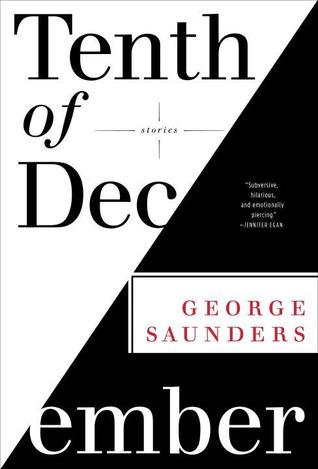
4. The Tenth of September by George Saunders


Tenth of December
In a year that saw Alice Munro win the Nobel, it would seem short shrift to not put a book of stories on the list. This one is fantastic beyond measure and written by a guy who is universally agreed to be one of the best living writers of the millenium. His commencement speech at Syracuse University went viral this year and the message in that great piece (maybe minus the obvious advice he gives about swimming in a river full of feces) was that if you could do one important thing in life, it was to err on the side of kindness. It's that sentiment that infuses all of the pieces in this phenomenal collection. Particularly poignant is the story of a man who abandons a suicide attempt to rescue a a boy who has fallen through the ice. Saunders uses his big brain and sharp, sharp humour to good use here in innovative ways. It's almost a guide to being human.

Here are some also rans:

The book that made me happy I didn't have Rich Parisian Bourgeois Problems: The Dinner by Herman Koch

The book that made me wish I could jump a plane to London to eat everything I saw between it's pages: Ottolenghi, the Cookbook by Sami Tamimi and Yotam Ottolenghi

The book that made me realize that some actors should stick to just reciting lines: Actor's Anonymous by James Franco

The book that gathered the most dust on my must read list and yet I still can't bring myself to open it and read it, God Damn It!: Life After Life by Kate Atkinson

The book that managed to make even a father-and-son hunt for his sister's attacker seem hilarious: Let's  Explore Diabetes with Owls by David Sedaris

The book that humanized the obesity epidemic for me: Big Brother by Lionel Shriver

The book that confirmed to me that living with a badly-behaved husband would be a total buzz kill: The Silent Wife by ASA Harrison

The book that confirmed that growing asparagus is a leap of faith: Animal, Vegetable, Miracle by Barbara Kingsolver 

Monday, December 9, 2013

Aging: Not for the Weak


So here it is. I'll try and keep it short. 

I keep forgetting my own age. I mean, I'm forty-four years old. It just seems really strange to me, and kind of awkward when I tell someone I'm a year younger than what I really am and then walk away, only to realize that I’m off by a year. I know a lot of people don't put much mind into their age, but to literally forget? I've had to actually recalculate from my birth date to see how old I was (whether I was off by a year or so). I don't have any severe mental illnesses (that I know of...) but for the past few years, every time my birthday rolls around, I literally have to calculate my age. Mostly it’s because I’ve brainwashed myself into believing that I am whatever age I want to be. Forget about age completely, I tell myself each morning and live as you see fit. This, I continuously tell myself, is the key  to keeping sprightly. And then it all goes to Hell in a hand-basket when I find myself explaining the concept of a phone booth to my kids and have them look at me like I am either, making it up, or emerging from the Dark Ages.


It's possible there is nothing wrong. From birth to the age of 21, it is a never ending series of positive milestones all lumped together. We not only count our years, but sometimes count our months in anticipation of the next step toward adulthood. But once you've reached 21, isn’t the world is pretty much your oyster? Aren’t you old enough to do what any other adult can do? There is no need for a countdown to your next birthday,  no real need to remember your exact age - especially when you have so many other numbers in life to remember.

When I told my husband about it, he thought it over carefully and decided that my age-forgetfulness wasn’t creepy or a sign of early-onset Alzheimer’s.

“You just suck at math.”

Oh. 

Thursday, November 14, 2013

3 Months a Parent


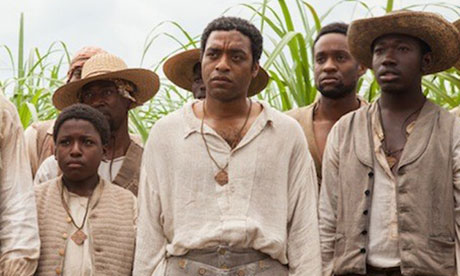
12 Years a Slave film still

We have a new addition to our household: Saara Laine! Saara is an exchange student from Finland who is gonna be shacking up with the Dinesen's for three months. She has been here for only a few short weeks and has already taught us so much about her country and what it like to have a 17-year-old super-athlete living under your roof. (Hint: it involves a quart of milk per day and a pound of bananas, so stock up next host parents!)

Saara likes her pop culture so she came to the right house. With the exception of her terrible taste in sitcoms (How I Met Your Mother...really?), she is hungry to explore and discuss what is out there in the zeitgeist. Our first conversations were about music, movies and art that engages and inspires us. It was a fantastic gateway into knowing who she is and what she likes and dislikes. Last week, she asked me if I would take her to see a movie and, of course, I said I would. And then I found myself in a dark theatre watching a movie that was so incredibly brutal and frightening that I wondered whether I had been a good 3 month-only parent to her.

The movie was 12 Years a Slave and I will say it is an absolutely exceptional movie in every way. Like many slavery films before it, 12 Years a Slave unfolds in the sweltering heat of southern plantations but, unlike its predecessors, director and visual artist Steve McQueen’s film focuses on a free man from the north who is kidnapped and sold into slavery. His name was Solomon Northup and the story is a true account. The reason, McQueen took this angle, apparently, was because he wanted everyone in the audience to feel like the main character.  And  Solomon, according to McQueen was that "someone who can take you, the audience, in this unfortunate conveyor belt of slavery.”

Well, mission accomplished.

Where  the movie breaks new ground is in the way that it exposes the old films on slavery - the old plantation epics - as frauds. This isn't a Gone With the Wind where the slaves live in harmony with their owners. It is also a very far cry from the absurdist fairy tale/revenge fantasy of Django Unchained.  It is, as David Denby of The New Yorker, pronounced it "easily the greatest feature film ever made about American slavery". No film has humanized the experience the way that this one does.  Anyone who has ever feared losing everything will identify with Solomon. And there are scenes and shots staged and photographed with such beauty that you won't forget them: in Washington, the men and women about to be shipped south, standing naked in a yard and washing themselves; the languid heat of the Louisiana summer where men chop wood from sun-up to sundown. And Solomon's face, the exceptional Chiwetel Ejiofor’s face—square jaw, furrowed brow - every time he is appalled or horrified by a situation and knows that he can't demonstrate his emotions because it will take his very life away.

I let my kids watch a lot of stuff that might be deemed inappropriate but I do it because they almost always want to talk about it afterwards. We've built a Wash, Rinse, Repeat-model for ingesting pop culture (except it's more Watch, Talk, Repeat) and it has served us well. But, after sitting through that movie with Saara, I wondered whether my model was one-size-fit-all appraoch was a sound one as she was very, very quiet afterwards. On the drive home from the theatre, I broke the ice by apologizing to her for exposing her to a movie that was emotionally very taxing. Then I told her about a few films that I would absolutely never see again: United 93, Requiem for a Dream, Leaving Las Vegas, Boys Don't Cry. I told her I would add this film to that list. She agreed that she was pleased that she'd seen it but that she, too, wouldn't watch it a second time. Difficult cinema is out there, I told her, but we all have a choice to watch or not. Some of us choose and still wish for a happy ending that we know is not coming. I think Saara figured out that she was one of those.

Monday, September 2, 2013

Real New Year's Day

Yesterday's retreat from the cottage was bittersweet. As we packed up our belongings and headed home as we always do, it was with the unspoken knowledge that we were embracing a new rhythm.

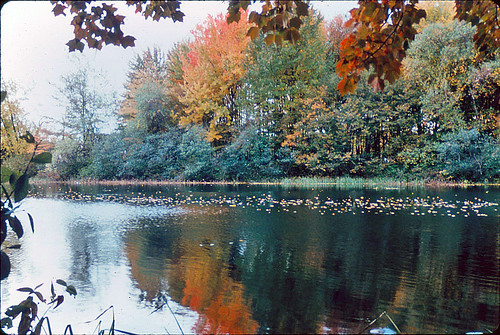
The thought was confirmed as I slid the car into the driveway and noticed that the roadside maple in my yard had jumped the gun and was already flaming. My lily's had long-since dropped their petals, their stems turned reedy. Not to mention, I have more tomatoes than I know what to do with, peppers begging to be pickled or turned into chili sauce and a bunch of rosemary so massive and fragrant that the squirrels have mistaken it for a tree and play ring around the rosy round it.

But the real ripening in my home is human. My son has outgrown his summer shoes and sleeps like a hibernating bear. He will rue the day each coming morning when I rouse him from bed for school, I suspect. My daughter flits around the house like a drunken butterfly her limbs threatening to overtake even mine in length. Whatever they may feel about returning to school, it causes me to wonder how they - not to mention me - got to be so old.
The feeling was echoed again perfectly as I read my morning newspaper: Labor Day, it proclaimed, has nothing to do with the rhythms of nature, nothing to do with the movement of the sun. It just happens that we pause every year about now and look around us and notice the way the small changes add up. It’s a reminder that we could do this almost any day of the year: declare a holiday, stand back, and consider the ebb and flow of the world we live in.

Labor Day, not New Year’s, is when the new year really commences.

Sunday, July 7, 2013

Summer Camp


My sweet-faced daughter is at camp and I miss her. I send her a letter every second day and get none in return. This is the way I like it. Getting letter from your kid at camp is like that day on Survivor near the end where you get a visit from your family: it just makes you realize how bad you miss them. The major difference at our house, however, is that unlike those on Survivor people, the rest of us will not end up stabbing each other in the back the moment our family member has left the island. We just don't roll like that. I guess that means that we aren't ready for prime time. I can live with that.

I do have a ton of time to read, write and spend time with my son who sees my daughter's two weeks at camp as the ultimate vacation. He can sleep in and his life is peaceful, easy and sister-free. When I ask him if he would like me to add a line to the letters I write he usually rolls is eyes until I can see the white parts. Then he tells me to tell her that he got a tattoo. That's usually when I sigh and make something up.

This year, I packed her a book that she loved. It was called, P.S. I Hate it Here. It is a book of letters that kids wrote to their parents while at summer camp. Some are good. Some bad. Most are hilarious.

Here is a sample:


And another....


See what I mean?

Thursday, June 13, 2013

Father


He ate the same breakfast every morning: two boiled eggs, two pieces of toast with marmalade and tea with four teaspoons full of sugar. When he got older, he added Bran Flakes to “keep things moving”. He packed his lunch each morning in a metal lunch pail and inside it were almost all of the same items he had for breakfast. The only change was the bread: it was not toasted. He ate his supper at the same time – 4:30 PM – and didn't care if anyone joined him. Prefered it, in fact. He also didn’t care what was on the menu provided that, whatever it was, was served with rice. This he made himself because nobody did it as well. This is the same reason he gave for ironing his own shirts. The dry cleaner botched the job. He used a hanky. He kept it in his left pants pocket and after blowing, meticulously folded the dry part over the wet before putting it back in his pocket. He snickered and shrugged his shoulder when we moaned that this was disgusting yet refused to surrender the practice. He played golf every day after work in the summer, turned on the television and watched sports when the snow started to fly. When spring came  again, he started it all over again. He was a Habs fan. He thought the 1984 Lakers had the first best first line in the history of basketball. He thought Lee Trevino was under-rated and didn’t understand why Jack Nichlaus was “Golf’s Darling”. He screamed so loudly when he saw Joe Theisman’s leg break that the house shook and the neighbors rush over to make sure everything was all right. It took two days for him to stop shaking his head and saying, Now that is disgusting. He called women he liked, “Darling”, men he liked, “Boss”. He loved to tell us what a “handsome son-of-a-bitch” he was and the way he said it lets us know that he still thought he was. He read the Sunday New York Times every week even though the paper didn’t reach town until Tuesday. He clicked his tongue at the headlines when it arrived and referred to the people in it by their first names. Pierre and Margaret are breaking up, for instance. Or, Fidel is having another anti-American rally in Havana. His legs were muscular and attractive in shorts and I secretly hoped that mine were the same. He loved to tell anybody who would listen about the time he got into an elevator in Montreal with Liz Taylor, how her eyes were violet and she wore a pill box hat. She smiled hello and he was instantly struck mute. He could recite most of e.e. cummings by heart and did so when the spirit struck him. He cried when Cher won an Oscar. He's gone but he is everywhere. In my son's quiet gaze. In my daughter's laugh. In the smell of cut grass. In the sound a car makes on gravel. Everywhere. All the time. Here. Now. Always.